
Avoid investing in a new ELSS scheme each year. Stick to one well-chosen scheme to avoid clutter in your portfolio.

Suitors for Punjab and Maharashtra Co-operative Bank (PMC Bank) may have to infuse additional capital of nearly Rs 750 crore so that the payout per depositor is more than the Rs 5 lakh sum assured by the Deposit Insurance and Credit Guarantee Corporation (DICGC). The Reserve Bank of India (RBI) has also slotted its board meeting on March 19 in Mumbai - a fortnight short of the current deadline to find a resolution for the beleaguered bank and the moratorium placed on it comes to an end. Sources close to the PMC Bank transaction said that the central bank wants the suitors "to go the extra mile so that depositors can get more than the Rs 5 lakh insured by the DICGC". This is also to ensure that the new owners of the bank - who are to be issued a small finance bank (SFB) licence - are serious and have deep pockets.

The Indian economy is expected to grow around 10 per cent during the current financial year on the likelihood of fewer COVID-19-linked supply disruptions and buoyancy in the global economy, said Poonam Gupta, director general of economic think-tank NCAER. The real challenge, however, would be to sustain a growth rate of 7-8 per cent in years to come, she said. "We could see annual growth in the ballpark range of about 10 per cent. "The reasons for this perceived optimism are: fewer supply disruptions; increased pent-up demand in the traditional and contact-intensive services; and a buoyant global economy.

Liberty Media president and CEO Greg Maffei told analysts on a conference call that the move was the most efficient way of putting cash into the business, with Formula One getting a net cash payment of $1.4 billion.

While the market may remain volatile this year, analysts expect equities to deliver positive returns by outperforming inflation and government bonds, supported by the fiscal stimulus in the US.

Bajaj Auto was the top gainer in the Sensex pack, surging around 7 per cent, followed by Bajaj Finance, Bajaj Finserv, Kotak Bank, PowerGrid and Axis Bank. On the other hand, ONGC, HDFC, TCS and Reliance Industries were among the laggards.

HDFC was the top gainer in the Sensex pack, rising around 3 per cent, followed by Bajaj Finance, HDFC Bank, IndusInd Bank, PowerGrid, UltraTech Cement, TCS, Tech Mahindra and L&T. On the other hand, ONGC, Maruti, Tata Steel, HUL, Bajaj Auto and Sun Pharma were among the laggards.

The problem for the NBFC sector is the funding inertia by banks and not lack of funds.

The NSE Nifty after shuttling between 10,408.65 and 10,224 points, ended 58.30 points, or 0.57 per cent, lower at 10,245.25.

Omkeshwar Singh, Head, Rank MF, a mutual fund investment platform, answers your queries.

Fund managers's compensation is largely tied to the assets they manage and scheme performance.

Should deposit growth continue to outpace credit growth, banks may end up ceding some hard-earned 25-50 bps improvement in profitability or net interest margin gained in the past two years.

RBI Governor flayed easy monetary policy of central banks in advanced economies saying it is "more cause than medicine".

'At this moment, investors should look for relative value within sectors and clear visibility (third-wave-or-not) on earnings delivery.'

Many banks' profits will take a hit and a few of them could even end up being in the red because of treasury losses, triggered by a sudden spike in government bond yields in the rising interest rate cycle, notes Tamal Bandyopadhyay.

The move may release funds locked in government securities and add to liquidity. With inflation expectations lowered, this should not impact bond sentiment in the short run

Why can't we have a sunset clause for the ARCs, which is a global norm? questions Tamal Bandyopadhyay.

The 44-player industry logged assets under management of Rs 26.33 lakh crore in October-end, as compared to Rs 27.04 lakh crore by November end, representing a growth of 3 per cent. Among debt-oriented schemes, overnight funds received flows worth about Rs 20,650 crore, the highest among the fixed-income segment last month.

HDFC and HDFC Bank's merger - touted as India's biggest-ever corporate merger - pumped up shares of the two entities on the bourses. Shares of Housing Finance Development Corporation (HDFC) skyrocketed 9 per cent while those of HDFC Bank zoomed 10 per cent. In comparison, the benchmark S&P BSESensex and the Nifty50 indices settled 2.2 per cent higher on Monday.
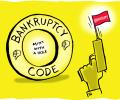
Bankers say debt resolution bills are coming high as resolution professionals are giving the human resources and audit/legal consulting to outside firms to plug all the loopholes.
The broader NSE Nifty too advanced 50.70 points, or 0.43 per cent, to close at 11,941.30.

Terming whistleblower allegations on loan evergreening as "grossly inaccurate and baseless", Indusind Bank on Saturday admitted to have disbursed 84,000 loans without customer consent in May owing to a "technical glitch". Lending without the consent was reported by the field staff in two days, and the glitch was also rectified expeditiously, the private sector lender said in a clarification. On Friday, there was a media report about anonymous whistleblowers writing to the bank management and the RBI about BFIL, the microlending-focused subsidiary of the bank, allegedly resorting to evergreening of loans, wherein existing borrowers unable to pay dues were given new loans to present the books as clean.

The ministry of petroleum and natural gas has granted seven authorisations to companies for selling automobile (auto) fuels in the country. These new approvals are under the relaxed guidelines for authorisation to market transportation fuels that were revised in 2019. This is expected to make the competition more intense in India's petroleum retail business. According to a top oil ministry official, a fresh marketing authorisation has been granted to Reliance Industries (RIL) under these norms. This is being done since RIL's existing retail marketing authorisation has been transferred to its subsidiary Reliance BP Mobility
Over 25 per cent of the net flows have been directed toward the large-cap category as investors preferred to put money in the top 100 stocks by market capitalisation because the segment has been the most resilient over the past year.

Vodafone Idea's net worth (or shareholders' equity) was down 73 per cent year-on-year to around Rs 17,600 crore at the end of the December 2019 quarter after the company reported a net loss of around Rs 6,400 crore during the quarter. Cumulatively, the company has lost nearly Rs 45,000 crore in the last four quarters, eroding its net worth to its lowest level in three-year. Analysts said a such a low level of net worth, coupled with continuing losses in operations, ruled out the possibility of the company getting fresh loans from lenders to fund its adjusted gross revenue (AGR) dues of Rs 54,000 crore.
Coming down heavily on MF players who in recent past chose to use shareholder fund to buy out debt of bleeding invested companies, Sebi said MFs can't have standstill agreements with companies and will take action against fund houses for such deals.

One category which stands out is fixed maturity plans due to its tax benefits, notes Prateek Mehta, CEO and company-co-founder, Upwardly.in.

Thus far in FY21, BSE, NSE have rallied 70 per cent and 71 per cent, respectively.

Acquisitions may have played a role in much of the increase.

The revised estimated expenditure for FY20 has been pegged at Rs 26.99 lakh crore and receipts at Rs 19.32 lakh crore, she said.
'The shadow banks are currently facing a liquidity and solvency crisis.' 'The danger is that it could potentially engulf the entire financial system because shadow banks have borrowed huge amount of money from banks, mutual funds, pension funds, and insurance companies.'
Banks normally park almost 27 per cent of their funds in government securitie.

India's GDP may turn positive at 1.3 per cent in the third quarter of 2020-21, having witnessed contraction in the previous two quarters due to the coronavirus pandemic, as the number of cases is falling and public spending has started rising, according to a report. The government will release the GDP numbers for the October-December quarter of the current fiscal on Friday. Projecting that the gross domestic product (GDP) may have returned to the black in the last quarter of the calendar year 2020, DBS Bank in the report said the full-year growth in real terms may be at a negative 6.8 per cent.

Of the Rs 20-lakh-crore package that Prime Minister Narendra Modi announced to defend the economy against coronavirus disruptions, fresh support may be only around 60 per cent of the offer as it counts the first financial stimulus and liquidity support that Reserve Bank has given already, and will overburden the bond market, says a report.

There will be different ways of returning the money, depending on the profile of the depositors and the amount, predicts Tamal Bandyopadhyay.

The combined interest payment for India's top listed companies, excluding financial and oil and gas firms, was up 15.2 per cent year-on-year during the six months ended March 2019, outpacing the change in net sales and operating profit.

The BSE SmallCap index gained 106 per cent in the one year ended May 12, 2021.

BSE's, NSE's overnight liquid fund facility can help stock investors maximise returns

Reliance Industries Ltd, the nation's most valuable company, on Thursday said it has raised $4 billion (around Rs 30,000 crore) in debt through the largest ever foreign currency bond issuance by an Indian entity. The oil-to-telecom conglomerate plans to use the proceeds of the three tranche issues to retire existing borrowings. The issue was "nearly 3 times oversubscribed with a peak order book aggregating around $11.5 billion," the company said in a statement. This is the largest ever foreign currency bond transaction in India, eclipsing ONGC Videsh Ltd's $2.2 billion US dollar bonds issue of 2014.
75 companies can dole out Rs 1.1 trillion from the 'extra cash' to shareholders.
